
Not many people in the fan community know who Gregory Smith is. For myself, I was not aware of him until a few weeks ago when by accident I happened upon his facebook page, Believe Foundation: https://www.facebook.com/#!/believefoundationusa?sk=info
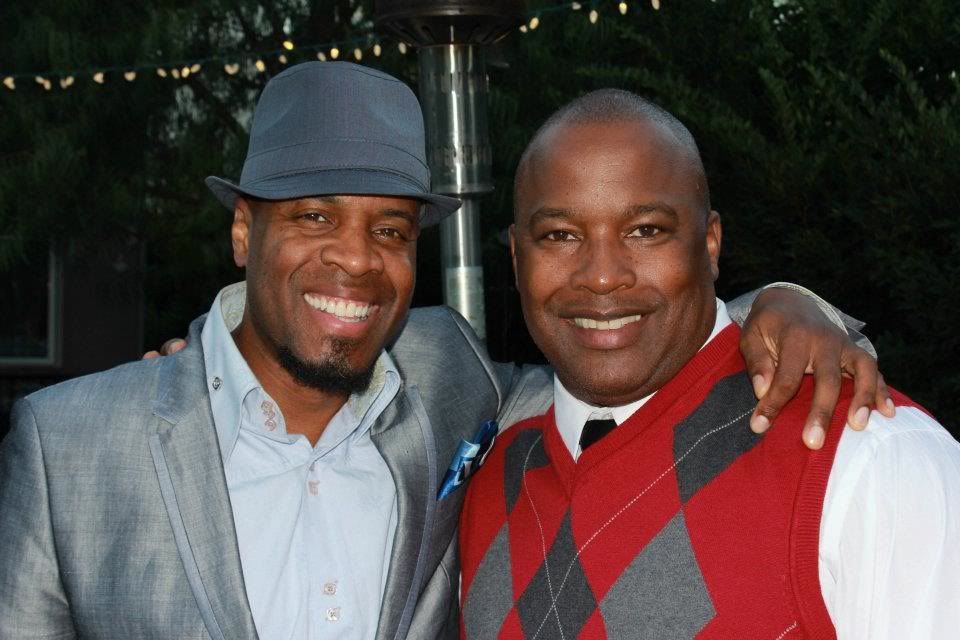
There, I saw a picture of him taken with Michael Bearden which piqued my interest and curiosity. Having interviewed Michael in the past, and finding in him a true sense of honesty and integrity, I knew that anything he was involved in would be something I would have no question in supporting. As I read a description of the Believe Foundation and what it stood for, I knew I had stumbled upon something that to me was a direct extension of Michael Jackson’s humanitarian legacy and empathy for children. I contacted Michael Bearden immediately asking what, if anything, I could do to help; how could I support this foundation. In turn, Michael put me in contact with Gregory Smith, a man with vision, dedication and heart, and the founder of the Believe Foundation.
Greg’s story is not uncommon. Growing up in South Central Los Angeles amongst gangs and violence, he lived through and witnessed what occurs on the street, but his strong sense of family, faith and belief in the way music can heal and change the world, brought him to the place where he stands now, changing the lives of disadvantaged and inner-city kids for the better. And that is really at the heart of this foundation, changing kid’s lives through art and music.
Up until now, the Believe Foundation has been running afters-chool arts programs in South Los Angles, but is now looking to expand and create the Los Angeles School of Arts and Entertainment. This school will provide kids with the opportunity to discover their talents and self-worth, and give them hope for a better tomorrow.
It was my pleasure to interview Greg, who gives us insight into his vision that was inspired by growing-up in South Central Los Angeles, and how that created a heartfelt need to give back to the community and provide kids with hope for a brighter future. We are also honored and privileged to have been asked to act as e-Ambassadors for the Believe Foundation, and this is something Dot to Dot and the Michael Jackson Tribute Portrait are proud to lend ourselves too.
Interview transcribed by Kelly Gallagher
Valmai: Greg, can you tell us something about yourself and your background?
Greg: My name is Gregory Smith, born in South Central Los Angeles, back in the early days. Born and raised by a minister, I am a pastor’s son, or the son of a preacher man. My father has been a minister since I was a baby. I was pretty much raised in the church element—and the church, being a community based church, was small. I’ve always had a tight-knit family base, and I’ve always tried to go the right way. Sure, we all get distracted every once in a while as a child, but I was pretty much born and raised in a very strict household.
I learned how to play music by ear, and I was discovered at a young age to play professionally. At 12, I started touring with a major gospel choir. Reverend James Cleveland....I’ve played with him back in the day—I was really well-known as a gospel drummer. So, I have a very interesting musical and religious background—and I love sports!
Valmai: Did you play a lot of sports growing up?
Greg: Yes, yes! Growing up in the "hood", one of the ways we were taught to possibly get out of that environment was through either sports or music and, unfortunately, that’s all we had to attach ourselves to immediately and see some type of a reward—to get a record deal, get discovered as a musician, or at least hopefully get a scholarship in sports. That’s all that we were taught, and that’s all we were able to see on television—athletes and musicians.
Valmai: Greg, growing up in South Central Los Angeles must have been difficult for you at times. Is it what you had to go through and what you witnessed, the inspiration behind creating the Believe Foundation?
Greg: Yes, I would definitely contribute it to my growing up; wanting to do something better in the community and showing kids other options. The Believe Foundation has always been a part of what I was born to do, wholeheartedly.
My father being a minister—you know, they always wanted me to take over the church and preach that upbringing, but I was always considered the “black sheep” because I always had a lot of questions about the religious aspect of things. So I made a deal with my parents that if they just let me go the way I wanted to go—[I'd} let something like Believe Foundation be my ministry. So to this day, I still always [ask] my mom, “Hey Mom, are still praying for my ministry?” She gave it two thumbs up years ago.
Greg: The ultimate goal as we stand right now—first let me give you a little history of how it evolved into the Believe Foundation. A few years ago, I was doing events for kids in South Central Los Angeles—major talent shows and major dance competition shows—trying to create a safe environment for them to come and be a part of, and to help their self-esteem. What I didn’t know at the time was that what I was doing was something, there was a cause. I was just doing it because it was in my heart to do [it].
My job as being one of the largest promoters in Los Angeles when I was doing dance events—I would get 2,000 to 5,000 kids in large arenas—I just didn’t know that I was really doing something really good. The ultimate goal at that time was just to create an environment where I could interest the kids and give them other options. Then somebody approached me about doing a non-profit, because at that time I wasn’t really making any money, I was actually spending my money trying to make money to cover the costs. But at that time, I was just trying to create some type of environment for kids to come to a place where they could do anything they wanted revolving being around music or around dance or sports, because that’s my upbringing. Then I started teaching at local schools—after-school programs—so I started falling into the teacher's mode of Well hey, I can teach, too; so let me start helping these kids out in another way as far as their education. Then I met with people who decided to take it to the next level and create the atmosphere of a performing arts school.
Valmai: Are there other schools like this in Los Angeles?
Greg: Not in the immediate Seventh District—this is where we’re looking now: District 7. In the immediate parts of South Central, now and over the past few years, there’s been a major shakeup of charter schools in Los Angeles. They’ve shut down numerous schools because of administraton doing their own thing with test scores and cheating, and things like that. So there’s been a shakeup, and the performing arts schools that did exist are gone.
As it stands, in the immediate South Central Los Angeles area, there is really no school like what we’re trying to build.
Valmai: When I was in Los Angeles this past June, I went to Gardner St Elementary School with other representatives of the Michael Jackson Tribute Portrait, and we spoke with the headmaster there. He said that in a lot of schools, not just in the innercity, but also in the surrounding areas, were suffering because the government is cutting back their funding on music and arts and other important programs.
Greg: Right, you’re absolutely right! It’s amazing, because out of all the things that help kids, art and music have, through the test of time, been shown to help. It’s amazing that they’re cutting the curriculum in public and charter schools when tests have already shown that low-income, high school seniors with a long-term involvement in band or orchestra, are twice as likely to score as highly proficient in math (33 percent) as their non-music counterparts. Now that’s been proven, you know?
There are so many kids who would go to school and get through math and English, if they knew they have another outlet, something they really loved to do which is music and art. I can testify to that because I was terrible in everything else, but when it came to music and sports I excelled. As I was told, “Hey, in order for you to play those things or to be involved in those things, you have to do well in school”. And it just made sense to me.
Valmai: Greg, you’re the Executive Director, President and Founder of the Believe Foundation. Michael Bearden and Sean Holt are also on the foundation’s board. Can you tell us how they came to be involved?
Greg: Sure. About four years ago, when the events I was doing for all these kids were realized, I started reaching out—like, what else can I do with this whole thing? Actually, I was making noise in the community, and I was one of the top promoters doing large events and had access to a ton of kids. A friend of mine named Will Weaton, knew Sean, who is an excellent singer, musician and businessman. Sean met with me, and we both realized we had the same passion and wanted to help kids in the community. From there, we partnered.
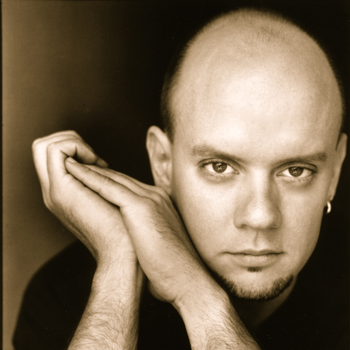
So Sean started to introduce me to people in his world. You know, it’s funny. Everybody knows somebody, but everybody has different worlds and circles. Sean saw me doing all these shows and he actually said, “Greg, why not do something? Let’s build a school, let’s do something really different—let‘s really change the world. These shows are great, but let’s really help these kids; let me help you change these kids’ lives”.
So, Sean really put me in the right direction to formulate the Believe Foundation, and ever since then, Sean has been bringing in people from his circle to help make this work, and that’s when he brought me to Michael Bearden.
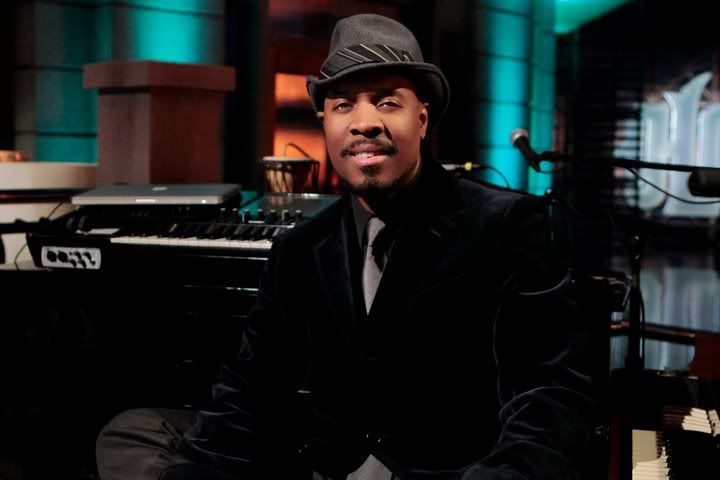
It was really amazing how it all worked out once I actually let my guard down and let Sean help me. Such a blessing, such a blessing.
Valmai: It’s amazing how all these connections have been made, but if you look back over it, it doesn’t appear to be a coincidence. More like something or someone else was directing you all to come together.
Greg: Right, right, exactly! A lot of it just has to do with just believing in yourself, just step out of the way and let your faith take over, per se. Sometimes we block it by putting up these walls that we can get over. We just have to step back and let things happen.
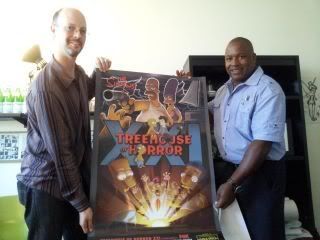
Greg: Well, Charles just recently came onboard. Sean introduced me to him. Sean and Charles have a 20-year relationship, and Charles was just recently introduced to the Believe Foundation when we had a function: a small, private fund-raising “coming out” party for Believe Foundation LASAE, which is the school’s name and stands for Los Angeles School of Arts and Entertainment. Charles was at that event. Once he saw the players and had a chance to hear us speak and present the whole concept of the Los Angeles School of Arts and Entertainment, he almost tore down the place, like, “Hey guys I want to be involved, I do”.
It’s amazing! You just don’t know! These are people who are high echelon, you know? They’re on a different level. Charles has been on "The Simpson’s" for 25 years; he’s an Emmy award-winning artist—he's the only Emmy award-winning illustrator on "The Simpsons". A guy with that stature and kind of caliber—it’s just amazing to see that his heart is right here.
He wants to teach. So he would definitely be involved in developing our curriculum when it comes to the animation department. But having his name involved with our school, there will be kids trying to get in from around the world who are interested in art and cartoon work, just because his name is associated with it, and he’s going to come up with a curriculum. So he’s pretty much almost created his own position, and we’re going to find him an office at the Believe Foundation and at the school. He will definitely be involved with helping the kids and developing our curriculum, and also in actually hiring our teachers to help in the animation department.
Valmai: At present, the foundation is running after-school arts programs and summer arts institutes, is that correct? Exactly what do these programs entail?
Greg: Well, right now I do run an after-school program where I go into schools in the community—schools in South Central Los Angeles—and I teach performing arts. I teach different elements. Basically, there are charter schools right now that have budgets to allow after-school programming. Some of the charter schools don’t have music teachers, of course. They don’t have art teachers. So, I am a part a situation where I am the “music guy”. I will come into certain schools and help create a curriculum to help teach kids music production, via songwriting, musical arrangement, and learning-related software—just showing them how to write songs and [teaching some] production aspects. I usually teach 3 to 6 hours a day in different schools in Los Angeles, and I’ve been doing that for the past couple of years while we’ve developing Believe Foundation and formulating the whole concept, including the school.
Originally, Believe Foundation was an after-school program where I was trying to go into different schools, teach music, bring in celebrities and set up camps—like a work-shop. Then when I brought in Dr. Walker as my project lead—he said we need to take it to the next level and build a performing arts school of our own. Why go to these charter schools when you can build your own? That’s when we came up with the vision of building LASAE.
Valmai: And how have the inner-city kids responded to these programs?
Greg: Oh, they love it, they love it! It’s funny, because teachers know that anything music or the arts-related can capture a kid. The kids African-American kids definitely have this inner art thing going on where they need to utilize it. Once we get the kids to open up and see what we’re doing, they welcome it with open arms. I mean, it’s unbelievable! Our classes are always full and kids are always asking questions. We also become mentors for the kids and we are available to them to answer their questions, to help them with work outside of music. They have a lot of questions and they are fascinated with music and art, so they've been very receptive. And, like I said, we all know the arts are so important to the schools, so we never have a problem with getting kids who are interested in art.
Valmai: The foundation is completing its formal charter petition for the Los Angeles School of Arts and Entertainment, which I believe the submission date is October 30. It is a public charter school that will open in the fall of 2012. Can you tell us more about this school and what curriculum it will offer? Is it going to include all forms of art and music, or just specific areas?
Greg: Right now, we’re just starting to get more people on board who bring us more things. For instance, we just signed Charlie for animation—we didn't have that before. We have art teachers who are proficient in actual painting and sculpting. We want to be well-rounded in the school, and any type of art we are open-minded to, but we just have to go with what we have [now] and what was available to us at the time, which started the vision. At that time, everybody who was on the board had something to do with music.
We’re starting to get more interest. For instance, Charlie is a great example because we are not animators; we don’t do drawings, none of us do what Charlie does. We need more people. I was really focused on bringing in dancing, but right now I am looking for someone with a more stable name to attach to the dancing side.
So, it’s going to be a well-rounded school. Anything dealing with the arts and entertainment is what we’re trying to offer. That’s the way we planned it, let’s put it out there, let’s build it, we believe in it and they will come and—here we go!
Valmai: Could you tell us how much money you have raised so far and how much you think will be needed to actually see the school completed and up and running?
Greg: We’ve raised $51,000 thus far. With the Los Angeles Unified School District, in order to get your application on file or “in line”, they require you to raise or have at least $250,000 in some form for your application to be accepted. So we’re trying to raise $250,000 so we can get our application in for 2011.
We’re stretching—our first fund-raiser raised $51,000. We just have to keep pushing, and if we can get to $200,000 we’ll be set. We think there are people out there who once they see something like this, will want to be involved. We just have to get to the right people who believe in the arts, believe in our vision and believe in what Michael Jackson stood for, too, because Michael Bearden is on board, and he said Michael would love this if he were alive.
Valmai: Oh yes, he would! But, don’t you have to have the submission in by the end of this month?
Greg: No. Actually, we were trying to get it submitted with a charter school for a new Proposition (Prop) 39. Prop 39 requires you to have it in by your first original target date, but they also require you to have the $250,000. We went back and forth, and we decided that Prop 39 wouldn’t be to our advantage because of the stipulation that they will place your performing arts school on a campus somewhere in South Central Los Angeles, and they pick the campus. So we decided we would be a little confined because of a location that we weren’t comfortable with.
The facilities didn’t have the state-of-the art auditorium or music room that we need. So now they’re giving us more time and we have until, I believe, December 1 before we have to have our application in.
Valmai: Well, that gives you a little breathing room; not much, but a little bit of breathing room.
Greg: Not much, right! But the other thing is that we’re also looking at other districts in Los Angeles. Like if you go on one corner of a street in Los Angeles, you can be in another small city that does not require the $250,000. So that’s what we’re looking at, and we have a little more time now.
Valmai: Greg, are you relying solely on donations or are you hosting fund-raisers as well?
Greg: Fund-raisers, yes, but donations is the way for us to go as non-profit. The good thing about Los Angeles is that corporations can make donations now, because the school board has allowed the schools to accept private donations from the corporations if the corporations can advertise on school grounds. For instance, Nike comes in; we can build a stadium and put Nike right on the floor.
Valmai: Do you have any corporate sponsors at the moment?
Greg: No, but you know what we need? We need that person on board who has the tenacity to go after the corporate sponsors, because like I said, at our first fund-raiser we were just trying to put the word out—here we are, help! We wanted to get the soldiers on board. We’re looking for more soldiers. So there are people who might not have the money, but have the resources/access to people with the money or access to people who know how to get the money. Actually, we’d love to have somebody who has access or time to donate to the Believe Foundation, to help us raise that money. That’s what we really need.
Valmai: So what about public support? Is the public aware of the foundation?
Greg: That’s a great question, because that’s where we are right now. We have to take it to the next level and get the public support. So we need media exposure. What you’re doing for me are things that we need, and that’s why I really appreciate the time and opportunity, because we need to be out, more or less. You know it’s hard to get press unless, unfortunately—I am going to be honest with you, it’s hard to get press unless you’re doing something negative in Los Angeles.
Valmai: Oh, I quite agree.
Greg: It’s amazing! With all the good we’re trying to do, it’s hard to get press unless we’re out shooting somebody or, you know, stealing something. It’s like, really? We’re on a major campaign; we need a great PR person to be willing to donate time to us to help us get the press, get the word out.
There are a lot of things we need, but if people come onboard and see what we’ve done so far with what we have, it’s like, a no-brainer. And it’s for the good of the kids. We need other people who want to help out, like Charlie. We know they’re a lot of other people out there like PR firms who can help us get the publicity out.
I am going to launch a major talent show within the next couple of weeks, an "American Idol" style/Apollo [Theater] talent show, where kids will be performing in front of Michael Bearden and Sean Holt, and we’re trying to get Slash to be a judge. There are a lot of names we’re trying to bring in that Michael has access to. He can actually put these kids in front of them. I am not saying a record deal, but at least give them the exposure.
Valmai: I am sure the media would be interested in something like that, if big celebrity names are attached to it?
Greg: Yes, exactly. That’s why, for the last week, I’ve been going back and forth. We’re trying to strategize how to launch the talent. “Let’s launch a major, city-wide talent show. Let’s make it nation-wide, if they can get here, and do a major talent show that would probably get the media interested, besides the "American Idol‘s" local in the community.”
So you can go ahead and put it on record that the Believe Foundation will launch a major talent show.
Valmai: The Believe Foundation is something that you’ve already said Michael [Jackson] would approve of, and no doubt if he were here, would offer his time and support to. Have you gained a lot of interest from his fans?
Greg: You know what? Yes, we have, because when I launched the foundation, I went straight to Michael Bearden’s fan page, and facebook started blowing up! Then we lost the Pepsi campaign to raise money to try to win this $50,000 grant. We came in 165th out of 1,000. You had to be in the top 10, so we didn’t make it, but we had a lot of fan support voting for the Believe Foundation, due to Michael Bearden’s involvement. But, I haven’t directly tapped into the Michael Jackson fan base; I am not an expert at that. For instance, you’re big to me because you’re right in that alley I was trying to get to. I was trying to get to his fan base. Let me ask you this: How did you find out about us again?
Greg: We need the Michael Jackson community to really stand behind this. Michael Bearden is very sensitive about it because he’s trying to protect Michael’s [Jackson] interests. He is so busy, I can’t really ask him to do that much as far as how to attach ourselves more to the Michael Jackson fan base. But I knew some way, somehow, someone would hear about us and take a liking to us and want to help us out. I really need that help.
Let me ask you this. How do we attach our track to Michael Jackson’s fans? Because we’re not using Michael Jackson’s name or anything.
Valmai: What you're doing is continuing a part of his humanitarian legacy and vision, just as the fans are, by supporting the Michael Jackson’s Children Hospital. His name doesn’t have to be attached to it for the fans to support it, and even if it were attached, there is no exploitation on your part.
Greg: Michael Bearden told me that helping children was something Michael [Jackson] loved to do—he loved the idea of Believe Foundation. I said, “Well Michael, can I put it out there in the press?” He was like, “Well, I don’t want to make it seem we’re using Michael”. I said, “We’re not. He told you that you’re going to do some great things, this is one aspect of what you need to be doing.”
It’s funny, because he’s told me so many stories of him and Michael just talking and envisioning things, but then he says to me he doesn’t want it to seem like we’re using Michael. But we’re not; we’re just carrying on the legacy.
Valmai: That’s it exactly. There’s a big difference between using Michael’s [Jackson] name for profit, and carrying on his name and legacy by providing inner-city and underprivileged children with a chance to discover their talents and realize their potential.
Greg: Exactly! The difference is exploiting. Michael Bearden gave us his blessing to put his name on this, not Michael Jackson’s, but it’s still part of his legacy.
Valmai: Agreed!
Greg: So we definitely would love to have Michael Jackson’s fans on board, and I really feel in my heart that they can help this thing pick up the momentum that it needs to get to the next level. It’s funny, everything happens for a reason. We went to see Michael Bearden and Michael Bearden saw this and the vision.
And, the other dream is for us to build schools in other cities, not only in Los Angeles, like Chicago or New York. Let’s keep it going, let’s make it happen—the Believe Foundation is known to build schools, that’s what we want to do.
Valmai: Well, you have a goal. First of all you’ve got to imagine, then you’ve got to believe it and then you make it happen.
Greg: That’s right, and that’s what I am doing, I am going for it!
Valmai: What can we, within the fan community, do to help the Believe Foundation attain its goals?
Greg: Oh wow, there’s so much! We need donations, definitely. You can go to the foundation’s web page: http://believefoundationusa.org/#/about/donate. We have a donation button you can click on the bottom, and it takes you to a secure PayPal account where you can put in any amount and donate. Donations are tax-deductible, we are 501C3. Just like with President Obama or a lot of the [political] candidates, you can’t operate without funding.
Unfortunately, we are in a situation where we need the funds to continue what I’ve created and started. I need the community support, donation-wise, and we need resources, like what you’re bringing to the table. We need exposure, we need press. We need our facebook page to blow up! You can find us on facebook at: https://www.facebook.com/#!/believefoundationusa?sk=info We need people to like us, and we need donations desperately!
Our goal is to reach the $250,000. Like I said, in just the first few months we were able to obtain $51,000, so we know we’re onto something. There are people who believe in this when they see it and they hear about it. So we need support and we need resources.
You know it’s funny—because, after doing all this and learning a lot of statistics, [you] basically [see] how important music and the arts are to kids, and it also helps keep kids out of trouble, we just need people to see that this is really, really important. Students immersed in a long-time arts-rich environment, outperform their arts-poor counterparts by 46% on standardized testing. That’s huge. And for them to take the arts out of the schools—it just does not make sense! 46% is amazing and proves that the arts is very critical.
So, I am going to go to my grave with this in my heart; I am actually getting a Believe tattoo on my shoulder. If I can get it past the wife, I am going to go get my Believe tattoo—I believe in this 100%; this is my calling. My Dad’s a preacher—and this is my ministry right here.
Valmai: And it’s a wonderful ministry!
Greg: Thank you!
Valmai: I want to thank you very much for giving me your time, and talking about the Believe Foundation. We will do our utmost to help promote it, get the word out there and get the fans’ support for it.
Greg: Please do, I really appreciate it. We have a vision for the Believe Foundation to build a school, The LASAE, and by getting your support, we’re on our way. I really appreciate the time for the interview, and the opportunity.
http://www.youtube.com/watch?v=6pYbHSsCu6Y
If you would like to offer your support to the Believe Foundation or make a donation, please visit their website and Facebook page.
https://www.facebook.com/#!/believefoundationusa?sk=info
https://www.facebook.com/#!/believefoundationusa?sk=info
By Valmai Owens
© 2011. All Rights Reserved. No reproduction without permission from author.
This interview appears in the publication Dot to Dot: Keeping Michael’s Legacy Alive,
http://mjtpmagazine.presspublisher.us/ and its content is the property of the authors and the Michael Jackson Tribute Portrait. Articles and exclusive interviews are copyrighted; therefore there should be no republication without permission. You may email editor@michaeljacksontributeportrait.com with any requests for republication. If permission is given, credit must be given to the author, Dot to Dot: Keeping Michael's Legacy Alive and the Michael Jackson Tribute Portrait.

